0086-379-64086155
In metallurgical production, a rotary kiln is expected to operate continuously under demanding conditions, including high temperatures, heavy material loads, and long operating cycles. Under these circumstances, equipment design has a direct impact on fuel consumption, product consistency, maintenance requirements, and overall production efficiency.
A metallurgy rotary kiln is not simply a rotating furnace for heating materials. Its performance depends on how well different design elements work together, including kiln dimensions, heat transfer conditions, material movement, mechanical structure, and process control. A well-designed kiln can provide stable treatment conditions, while an unsuitable design may lead to uneven heating, higher energy consumption, and increased downtime.
This is particularly important in applications such as alumina production. An alumina rotary kiln must maintain accurate temperature control and consistent material residence time to achieve efficient calcination. Therefore, understanding how rotary kiln design influences operational results is essential for companies planning new production lines or upgrading existing equipment.
In metallurgical processes, achieving the required reaction or transformation is highly dependent on temperature distribution inside the kiln. Materials need to receive sufficient heat for the right amount of time, while excessive heating may increase energy consumption and affect product quality.
The design of a metallurgy rotary kiln determines how heat moves through the system and how evenly materials are processed. Factors such as kiln size, rotation speed, inclination angle, combustion arrangement, and internal structure all influence the interaction between hot gases and materials.
For example, if material movement is too fast, the heat transfer process may not be completed effectively. If the material remains inside the kiln for too long, energy consumption may increase without providing additional production benefits. A suitable design creates a balance between processing time and thermal efficiency.
This principle is especially important for an alumina rotary kiln. During alumina calcination, stable temperature conditions are required to remove chemically combined water and achieve the desired material characteristics. Any fluctuation in the heating process may affect calcination quality and increase operational challenges.
A properly designed rotary kiln considers the characteristics of the raw material, production capacity requirements, and thermal conditions of the process. Instead of focusing only on increasing output, effective design aims to create a stable operating environment where efficiency and product quality can be maintained together.
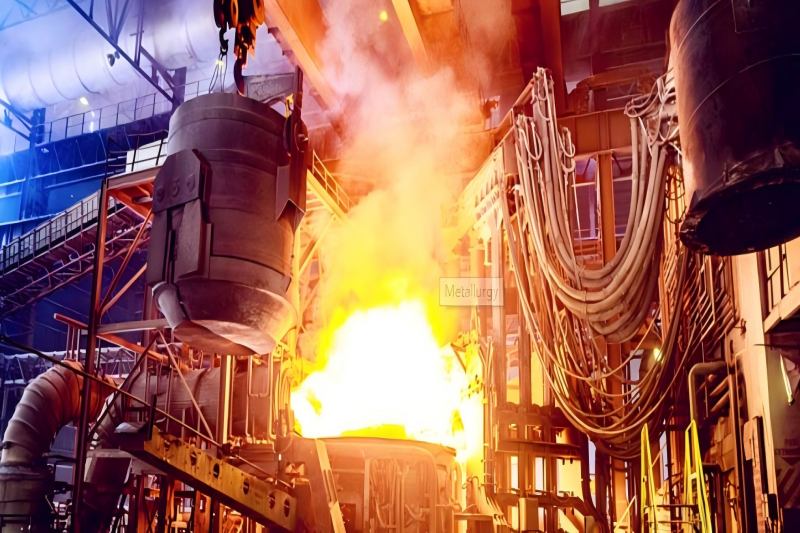
The physical structure of a rotary kiln has a direct influence on how materials travel through the equipment. During operation, materials continuously move, rotate, and exchange heat with hot gases. The way this movement occurs determines how effectively the metallurgical process is completed.
The relationship between kiln diameter and length affects the available processing space and material residence time. A properly designed metallurgy rotary kiln allows materials to pass through different temperature zones gradually, providing sufficient time for heating, reaction, and cooling processes.
Internal components also play an important role. The arrangement of internal lifting structures, for example, can improve material dispersion and increase contact between materials and hot gases. Better contact improves heat transfer efficiency and helps achieve more uniform treatment results.
| Design Aspect | Influence on Operation | Expected Result |
|---|---|---|
| Kiln dimensions | Controls material residence time and processing capacity | More stable production conditions |
| Internal structure | Improves material distribution and heat exchange | More consistent thermal treatment |
| Rotation control | Regulates material movement through the kiln | Better process stability |
| Refractory lining design | Protects the shell and reduces heat loss | Longer service life and improved energy utilization |
For an alumina rotary kiln, these design factors directly affect calcination performance. Since alumina production requires precise thermal control, the kiln must provide reliable material movement and stable heat distribution throughout continuous operation.
Improving thermal efficiency is one of the main goals in modern rotary kiln development, but efficiency cannot be separated from operating stability. A kiln that consumes less energy but cannot maintain stable production conditions will not deliver long-term value.
The thermal system of a metallurgy rotary kiln needs to be carefully matched with the material characteristics and production process. Combustion performance, airflow organization, insulation performance, and temperature control all influence how effectively heat is used inside the kiln.
For instance, inefficient airflow may create uneven temperature zones, causing some materials to receive insufficient heat while other areas experience excessive heating. This not only affects product quality but may also increase fuel consumption and operational adjustments.
A well-integrated kiln system focuses on maintaining a stable thermal environment. Through appropriate combustion design and process monitoring, operators can achieve more predictable production performance while reducing unnecessary energy losses.
C.I.C. Machinery develops rotary kiln equipment by considering both thermal requirements and mechanical conditions. Different industries require different kiln configurations, and selecting a suitable equipment design is essential for achieving reliable operation. More information about available equipment solutions can be found in C.I.C. Machinery’s product range.
A rotary kiln operates under continuous rotation and high-temperature conditions, which places significant demands on mechanical design. Even when thermal performance is excellent, insufficient mechanical stability can shorten equipment life and increase maintenance requirements.
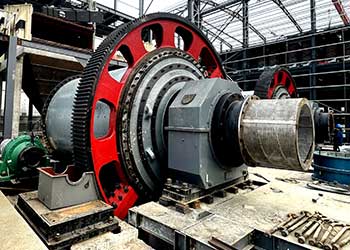
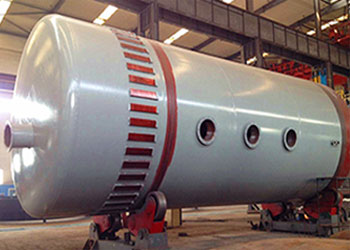
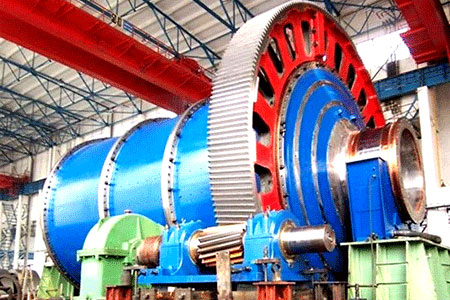
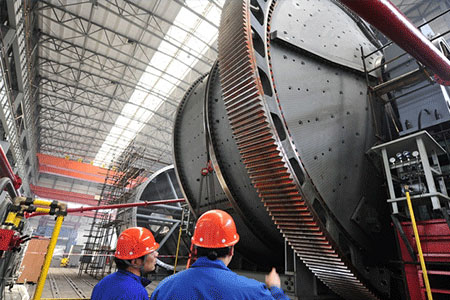
The reliability of a metallurgy rotary kiln depends on the coordination of multiple components, including the kiln shell, supporting rollers, riding rings, drive system, and lubrication system. These components must work together to maintain smooth rotation and prevent excessive stress during operation.
One important consideration is controlling mechanical deformation caused by temperature changes and heavy loads. Proper alignment of supporting components helps reduce vibration and uneven wear, while suitable material selection improves durability in harsh operating environments.
The refractory lining is another important part of kiln reliability. It protects the inner structure from high temperatures and chemical reactions while helping reduce heat loss. For an alumina rotary kiln, reliable refractory performance is especially important because the equipment often operates continuously for long production cycles.
By focusing on mechanical strength and maintenance accessibility during the design stage, manufacturers can help users reduce unexpected shutdowns and maintain stable production over a longer service period.
Industrial users today are looking for rotary kiln systems that provide more than basic processing capability. Higher production efficiency, lower energy consumption, and improved environmental performance have become important considerations when selecting metallurgical equipment.
The development of the metallurgy rotary kiln is moving toward more intelligent and controlled operation. Advanced monitoring systems, automated process adjustments, and improved energy management technologies are helping operators maintain more stable production conditions.
For industries using an alumina rotary kiln, optimization is focused on improving calcination efficiency while reducing fuel consumption. Better heat recovery methods, more accurate temperature monitoring, and improved combustion control can help create a more sustainable production process.
Future rotary kiln design will continue to focus on the balance between productivity and resource efficiency. Equipment that can adapt to changing production requirements while maintaining stable performance will become increasingly valuable in modern industrial applications.
Because every production environment has different material characteristics and operating requirements, selecting the appropriate rotary kiln configuration requires technical evaluation. Companies looking for a suitable solution can discuss their application requirements with C.I.C. Machinery’s engineering team through the engineering consultation channel.
The design of a metallurgy rotary kiln has a direct influence on how efficiently materials are processed, how reliably equipment operates, and how consistently production targets can be achieved. From kiln geometry and thermal systems to mechanical structures and process control, every design decision contributes to overall performance.
For applications such as alumina production, an optimized alumina rotary kiln provides the stable heating environment required for efficient calcination and continuous operation. As industrial demands continue to increase, rotary kiln design is evolving toward higher efficiency, better reliability, and more sustainable operation.
Choosing the right rotary kiln design is not only about equipment capacity. It is about creating a processing system that can deliver stable results throughout years of operation.
The performance of a metallurgy rotary kiln is influenced by kiln dimensions, heat transfer efficiency, material movement, combustion conditions, and mechanical design.
Kiln geometry determines material residence time, movement behavior, and heat exchange conditions, which directly affect processing results.
Energy efficiency can be improved through better thermal design, reduced heat loss, optimized combustion, and improved process control.
An alumina rotary kiln is designed specifically for alumina calcination, requiring precise temperature control and stable material treatment conditions.
Mechanical design affects service life by influencing component alignment, wear resistance, vibration control, and maintenance requirements.
Companies should evaluate technical experience, equipment design capability, process requirements, reliability, and after-sales technical support.



Contact Us
 English
  日本語
日本語  français
  Deutsch
  Español
  italiano
  русский
  português
  العربية
  română
  Nederland


 日本語
日本語