0086-379-64086155
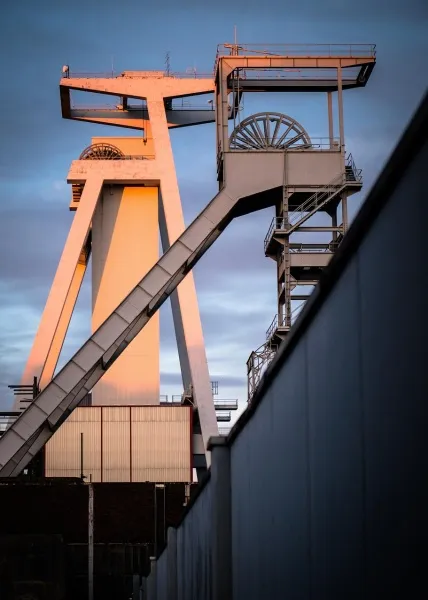
A mine hoist (also called a mine winder or shaft hoist) is a large lifting machine installed at the top of a mine shaft. It raises and lowers ore, rock, equipment, and miners between the underground workings and the surface. In underground mines, the hoist is the "lifeline" of the mine — almost everything entering or leaving the shaft depends on it.
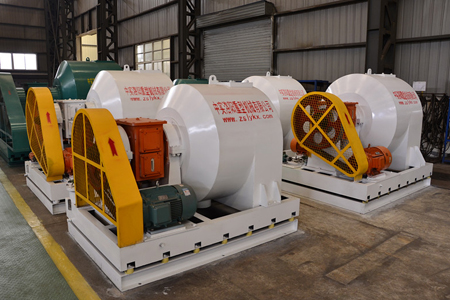
The mine hoist works on a simple principle: a steel rope is wound around a drum or over a friction wheel, and the lifting or lowering of the load is driven by a powerful motor.
The motor drives the drum (or friction wheel) to rotate.
The steel rope winds onto or unwinds from the drum, pulling the skip (ore container) or cage (personnel car) up and down the shaft.
A counterweight (or a second container) balances the load, reducing energy consumption.
Braking and safety systems stop the hoist precisely and protect against emergencies such as rope breakage or overspeed.
There are two main types: the drum hoist, where the rope spools onto a drum, and the friction hoist (Koepe hoist) where the rope passes over a friction wheel. Friction hoists are commonly used for deep shafts, while drum hoists suit medium-depth applications.
Motor and reducer — provide the driving power.
Drum or friction wheel— the core part that moves the rope.
Steel rope — the lifting medium connecting surface and underground.
Skip or cage — carries ore or personnel.
Braking system — ensures safe stopping.
Head frame and guides— support and guide the containers along the shaft.
Mine hoists are mainly used in:
Underground metal and non-metal mines — hoisting ore, waste rock, materials, and personnel.
Coal mines — coal and personnel hoisting in vertical shafts.
Deep engineering and construction— shaft sinking and underground construction material transport.
Water conservancy and hydropower tunnels — hoisting of excavated materials and equipment in inclined or vertical tunnels.
The lifting capacity ranges from a few tons for small mines to tens of tons for large mines, with hoisting depth from tens of meters to over 1,000 meters. It is one of the most critical pieces of equipment in any underground mining operation.


Contact Us
 English
  日本語
日本語  français
  Deutsch
  Español
  italiano
  русский
  português
  العربية
  română
  Nederland


 日本語
日本語