0086-379-64086155
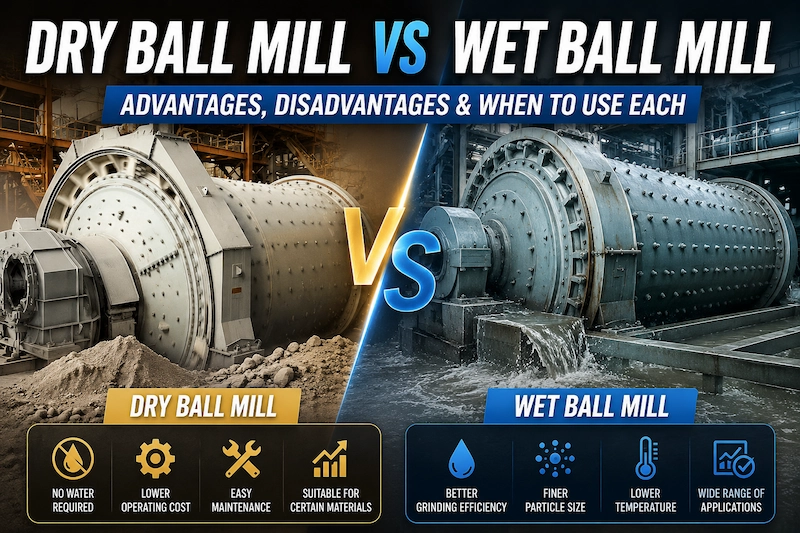
Selecting between a dry ball mill and a wet ball mill is one of the most important decisions in mineral processing, cement production, chemical manufacturing, and industrial grinding operations. Both technologies are widely used, but they differ significantly in efficiency, operating cost, material suitability, maintenance requirements, and final product quality.
In general, wet ball mills offer higher grinding efficiency and finer particle sizes, while dry ball mills provide simpler operation, lower water consumption, and easier downstream processing for moisture-sensitive materials. The best choice depends on your raw material characteristics, production goals, environmental conditions, and operating budget.
The primary difference lies in whether water is added during the grinding process.
Dry Ball Mill: Material is ground without water, producing dry powder directly.
Wet Ball Mill: Water is added to create slurry during grinding.
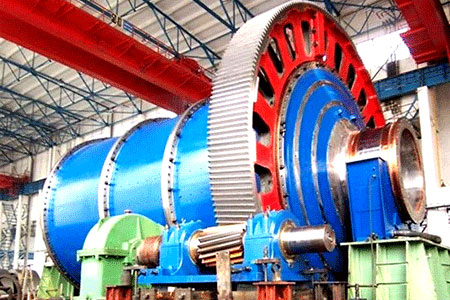
Both systems use rotating cylinders filled with grinding media such as steel balls or ceramic balls. As the cylinder rotates, impact and attrition reduce material size.
| Factor | Dry Ball Mill | Wet Ball Mill |
|---|---|---|
| Grinding Efficiency | Moderate | Higher |
| Particle Size | Coarser | Finer |
| Water Consumption | None | High |
| Dust Generation | Higher | Minimal |
| Operating Complexity | Simpler | More Complex |
| Suitable Materials | Moisture-sensitive materials | Most minerals and ores |
| Product Handling | Immediate packaging or transport | Requires dewatering or drying |
| Maintenance | Lower | Higher |
| Environmental Control | Requires dust collection | Less airborne dust |
Dry grinding eliminates the need for water supply systems, slurry pumps, thickeners, and dewatering equipment.
This makes dry mills particularly attractive in:
Arid regions
Remote mining sites
Areas with strict water regulations
Operations facing water shortages
Because no slurry handling equipment is needed, dry grinding plants often require lower initial investment.
The process flow is typically simpler:
Feeding → Grinding → Classification → Product Collection
Many industrial materials cannot tolerate moisture exposure.
Examples include:
Cement clinker
Gypsum powder
Lime
Certain chemical powders
Industrial minerals
The finished product is already dry, reducing logistics costs and eliminating drying requirements.
Dry grinding produces significant airborne dust. Modern systems require:
Bag filters
Dust collectors
Negative pressure ventilation systems
Without water lubrication, particle movement is less efficient. This often leads to:
Higher energy consumption per ton
Longer grinding times
Lower throughput
Friction during dry grinding generates heat, which may affect temperature-sensitive materials.
Water acts as a transport medium, improving particle movement and reducing friction.
Benefits include:
Higher throughput
Finer product size
Improved energy utilization
Wet grinding often produces a more uniform particle size distribution, which is critical in:
Mineral beneficiation
Flotation circuits
Chemical processing
Ceramic production
Because material remains suspended in slurry form, dust generation is dramatically reduced.
This improves:
Worker safety
Environmental compliance
Plant cleanliness
Many mining operations prefer wet grinding because it allows larger production volumes with consistent quality.
Water availability becomes a major concern in regions with limited resources.
Wet grinding circuits frequently require:
Slurry pumps
Hydrocyclones
Thickeners
Filters
Dryers
These systems increase capital investment and maintenance costs.
Continuous exposure to water may accelerate corrosion of liners, grinding media, and auxiliary equipment.
A dry ball mill is often the preferred solution when:
Water resources are limited
Products must remain dry
Dust collection systems are available
Lower infrastructure costs are desired
Grinding cement clinker or industrial minerals
Many buyers searching for a reliable china dry ball mill prioritize energy efficiency, wear resistance, and long service life when evaluating suppliers.
A wet ball mill is generally recommended when:
Processing metal ores
Operating flotation circuits
Producing ultra-fine particles
Maximizing throughput
Dust control is a priority
Wet grinding remains the dominant technology in modern mineral processing plants because of its superior grinding performance.
| Material Type | Recommended Mill Type |
|---|---|
| Gold Ore | Wet Ball Mill |
| Copper Ore | Wet Ball Mill |
| Iron Ore | Wet Ball Mill |
| Cement Clinker | Dry Ball Mill |
| Gypsum | Dry Ball Mill |
| Limestone Powder | Dry Ball Mill |
| Ceramic Materials | Wet Ball Mill |
| Chemical Powders | Depends on moisture sensitivity |
Wet ball mills often achieve better grinding efficiency, resulting in lower energy consumption per ton of finished product.
Dry ball mills generally have fewer auxiliary systems and lower maintenance complexity.
Yes, but liner design, grinding media selection, and contamination concerns should be carefully evaluated.
Yes. As water conservation becomes increasingly important worldwide, many industries are investing in advanced dry grinding technologies.
Beyond choosing dry or wet grinding technology, buyers should evaluate:
Manufacturing quality
Engineering support
Spare parts availability
Installation services
Energy efficiency guarantees
Customization capability
After-sales support
Experienced manufacturers can optimize mill dimensions, liner configurations, and grinding media selection according to your specific application.
Neither dry ball mills nor wet ball mills are universally superior. The optimal choice depends on your raw material properties, water availability, production targets, environmental requirements, and overall operating costs.
Dry ball mills offer simplicity, lower water dependence, and easier product handling, while wet ball mills deliver higher grinding efficiency, finer particle sizes, and greater throughput. Understanding these trade-offs helps buyers make informed investment decisions and achieve long-term operational success.


Contact Us
 English
  日本語
日本語  français
  Deutsch
  Español
  italiano
  русский
  português
  العربية
  română
  Nederland


 日本語
日本語