0086-379-64086155
A Technical Guide for Mineral Processing and Cement Professionals
In mineral processing and cement production, the grinding media inside a ball mill directly determines grinding efficiency, energy consumption, and final product quality. Yet many operators overlook the critical role of media selection, focusing instead on mill speed or liner design.
This article breaks down the key factors in grinding media selection—from material type to size distribution—so you can optimize your mill's performance and reduce operating costs.
The most common grinding media. Produced by casting molten steel into spherical shapes. Available in various hardness levels (HRC 40–65).
Pros: Low cost, wide availability, customizable hardness
Cons: Inconsistent quality across batches, potential for spalling
Made by hammering or pressing heated steel billets into balls. Denser internal structure compared to cast balls.
Pros: Higher durability, uniform density, longer service life
Cons: Higher unit cost, limited size range for very large diameters
Contain 10–30% chromium, offering exceptional wear resistance.
Pros: Excellent hardness, lowest wear rate, suitable for wet grinding
Cons: Brittle under high-impact conditions, higher initial cost
Includes alumina (Al₂O₃), zirconia, and silicate-based balls.
Pros: No iron contamination, lightweight, corrosion-resistant
Cons: Low impact resistance, limited to fine grinding applications
The grinding media should be 3–5 HRC harder than the material being ground. If the media is too soft, it wears quickly; if too hard, it becomes brittle and may fracture.
Rule of thumb: For grinding medium-hard ores (Mohs 5–7), use media with HRC 55–62. For hard ores (Mohs 7+), use HRC 60–65.
Higher density media generates greater impact force per collision. For coarse grinding (feed size > 10mm), high-density steel balls are preferred. For fine grinding (< 1mm), lower-density media may suffice.
Media Type | Density (g/cm³) | Best For |
Forged Steel | 7.8 | Coarse & medium grinding |
Cast Steel | 7.6–7.8 | General purpose |
High Chrome | 7.4–7.6 | Wet grinding, fine grinding |
Ceramic | 3.6–5.0 | Ultra-fine, contamination-free |
Proper gradation is critical. A well-designed media size distribution achieves:
Maximum packing density—reducing void space
Optimal energy utilization—large balls break coarse particles, small balls grind fines
Balanced wear—uniform consumption across sizes
Common approach: The "single-size plus smaller" method—use a dominant ball size plus 10–20% smaller balls to fill inter-particle voids.
Media wear rate is measured in grams per ton of material processed (g/t). Typical ranges:
Media Type | Wear Rate (g/t) |
Forged Steel | 300–800 |
Cast Steel | 400–1200 |
High Chrome | 50–300 |
Ceramic | 10–100 |
Lower wear rate means longer service life and less iron contamination in the product.
Many buyers focus solely on the unit price of grinding media. But the real cost metric is cost per ton of material processed:
Cost per ton = (Media Price × Consumption Rate) / Throughput
A high-quality forged steel ball may cost 30% more per unit than a cast steel ball, but if its wear rate is half, the actual cost per ton processed is lower.
Lifecycle cost comparison example:
Item | Cast Steel | Forged Steel |
Price per ton | $800 | $1,100 |
Wear rate (g/t) | 800 | 400 |
Cost per 1000t processed | $640 | $440 |
Savings | — | $200/1000t |
❌ "Harder is always better"
Excessive hardness can lead to brittle fracture and increased ball breakage rates, especially in large-diameter mills.
❌ "One size fits all"
The optimal media size depends on feed size, mill diameter, rotational speed, and target product fineness. A single size rarely optimizes all stages of grinding.
❌ "Cheapest option = best value"
As shown in Section 3, unit price does not reflect total cost. Always evaluate cost per ton.
❌ Neglecting media quality consistency
Inconsistent ball quality leads to unpredictable wear patterns, frequent shutdowns for recharging, and unstable product quality.
Audit your current feed and product — Measure feed size distribution and target fineness before changing media
Start with a controlled trial — Test new media in one compartment or mill, measure wear rate over 500+ operating hours
Monitor mill power draw — Changes in media density directly affect energy consumption
Work with reputable suppliers — At CIC Heavy Machinery, our grinding mills are designed with optimized media specifications in mind, and we recommend matched consumables for maximum performance
Grinding media selection is not a one-time purchasing decision—it's an ongoing optimization process. The right choice can reduce your operating costs by 15–30% while improving throughput and product quality.
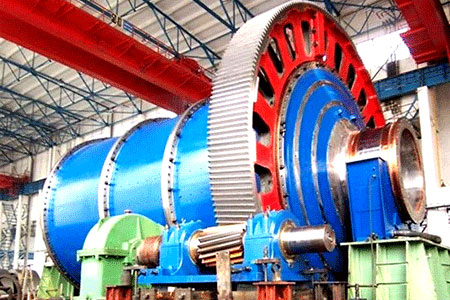
At CIC Heavy Machinery, we not only manufacture high-performance ball mills but also provide technical guidance on media selection tailored to your specific ore characteristics and processing goals.
CIC Heavy Machinery is a leading manufacturer of grinding mills, rotary kilns, and large gears for the mining and cement industries. With advanced machining facilities including 8-meter CNC vertical lathes, 6×20m heavy-duty horizontal lathes, and gantry machining centers, we deliver precision-engineered equipment trusted by clients worldwide.


Contact Us
 English
  日本語
日本語  français
  Deutsch
  Español
  italiano
  русский
  português
  العربية
  română
  Nederland


 日本語
日本語