0086-379-64086155
CIC Heavy Machinery Co., Ltd. — Technical Report
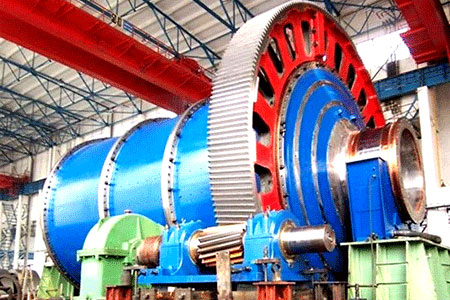
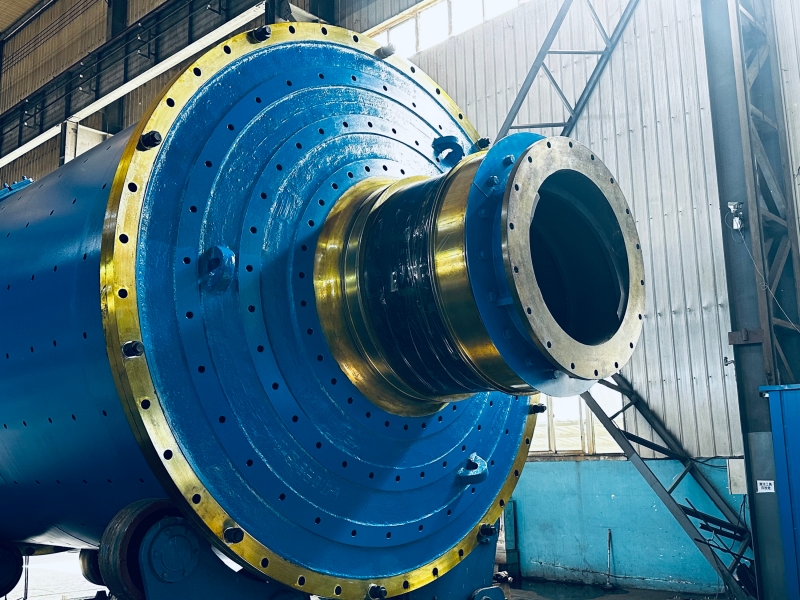
[Featured Image: Newly painted blue ball mill — post sandblasting and painting, ready for shipment]
In the world of mineral processing and mining operations, few pieces of equipment carry as much weight — literally and figuratively — as the ball mill. As a critical machine in the grinding circuit, the ball mill is responsible for reducing ore particles to the size required for downstream extraction processes. From gold and copper mines to cement plants and power stations, ball mills are the unsung workhorses of heavy industry.
The global grinding mill market, valued at approximately USD 5.4 billion in 2024, is projected to reach over USD 7 billion by 2032, driven by growing mining activities and increasing demand for mineral commodities (Grand View Research, 2024). Within this market, ball mills account for the largest share of installed grinding equipment worldwide.
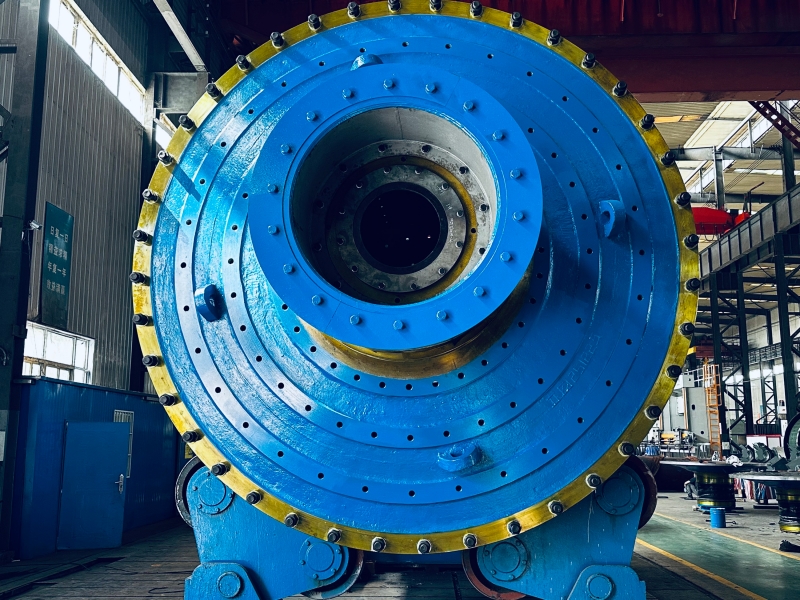
A ball mill is a type of grinder used to grind and blend materials for use in mineral dressing processes, paints, pyrotechnics, ceramics, and selective laser sintering. It consists of:
A rotating cylindrical shell filled with grinding media (steel balls)
Feed and discharge ends with proper sealing systems
A drive system — typically ring gear + pinion or gearless drive
Liner plates on the inner surface to protect the shell and impart motion to the charge
How it works: The cylinder rotates at a speed of roughly 60–75% of critical speed. The grinding media (steel balls, typically 40–100mm diameter) are lifted by the rotation and cascade/cataract down, crushing the ore particles through impact and attrition (Wills & Napier-Munn, Mineral Processing Technology, 2006).
Type | Application | Feature |
Overflow Ball Mill | Fine grinding, mineral processing | Simple structure, low cost |
Grate Ball Mill | Coarse grinding, higher discharge | Grate plate at discharge end |
Dry Grinding Ball Mill | Cement, refractory, chemical | No water, air-swept system |
Wet Grinding Ball Mill | Mineral beneficiation | Water assists material flow |
Energy-Saving Ball Mill | General purpose | 20–30% energy reduction |
(Source: CIC Heavy Machinery technical documentation; industry standard classifications)
A ball mill's performance depends heavily on precision manufacturing. Key quality indicators include:
Shells are rolled from heavy steel plate and welded using automated submerged arc welding (SAW). Post-weld heat treatment (PWHT) is essential to relieve residual stress. Our shells are machined on 8-meter CNC vertical lathes and 6×20m heavy-duty horizontal lathes to ensure dimensional accuracy within ±1mm.
The ring gear and pinion set is the most critical transmission component. Large gears up to 8–12 meters in diameter are cut on dedicated gear hobbing and shaping machines in controlled-temperature workshops. Gear accuracy directly affects mill life, noise, and energy consumption.
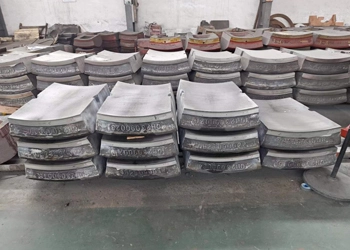
High-quality manganese steel or alloy steel liners extend service life. Cast and machined to exact specifications, liners protect the shell while optimizing grinding efficiency.
After fabrication, every mill undergoes abrasive blasting (sandblasting) to SA 2.5 standard (near-white metal finish), followed by priming and painting. The final paint coat — as shown in the image of our newly painted blue ball mill — provides corrosion resistance for ocean shipping and outdoor storage.
(Standards referenced: ISO 8501-1 for surface preparation; AGMA 2001 for gear quality)
"Cheap" ball mills often hide costly problems:
Poor welding leads to shell cracking within months
Low-grade gears produce excessive vibration and premature wear
Thin liners require replacement every 6–8 months instead of 2–3 years
Poor alignment doubles energy consumption and reduces throughput
Industry data indicates that energy costs account for 30–40% of total mill operating costs (Holmberg et al., "Energy Efficiency in Grinding Circuits," 2021). A well-manufactured mill can reduce energy consumption by 15–25% over its lifetime, translating to hundreds of thousands of dollars in savings for a typical mining operation.
Industry | Application |
Gold / Copper Mining | Grinding ore to liberate valuable minerals |
Cement Production | Grinding clinker into finished cement |
Power Generation | Pulverizing coal for boiler feed |
Chemical Processing | Fine grinding of raw materials |
Slag Processing | Recycling steel mill waste |
A ball mill is a long-term investment that shapes the productivity of an entire processing plant. Choosing the right manufacturer means looking beyond the price tag to the quality of gear cutting, shell welding, machining precision, and corrosion protection.
At CIC Heavy Machinery, every mill we produce — from design and casting to final painting and testing — is built with the understanding that downtime on a mine site costs more than the equipment itself.
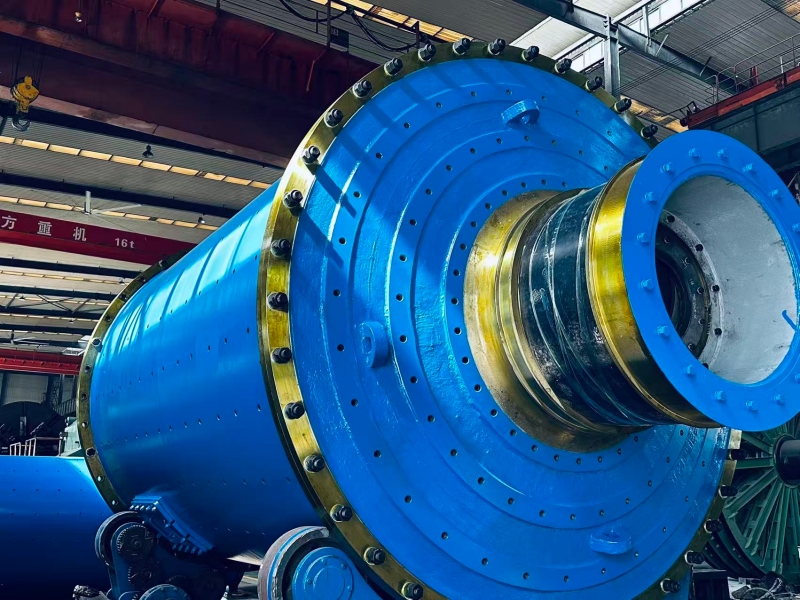
[Image: Blue ball mill — post sandblasting and painting, ready for quality inspection before overseas shipment.]
CIC Heavy Machinery Co., Ltd.
Web: www.cicemech.com | Email: johnson.ji@cichmc.com | WhatsApp: +86 130 0758 2226


Contact Us
 English
  日本語
日本語  français
  Deutsch
  Español
  italiano
  русский
  português
  العربية
  română
  Nederland


 日本語
日本語