0086-379-64086155
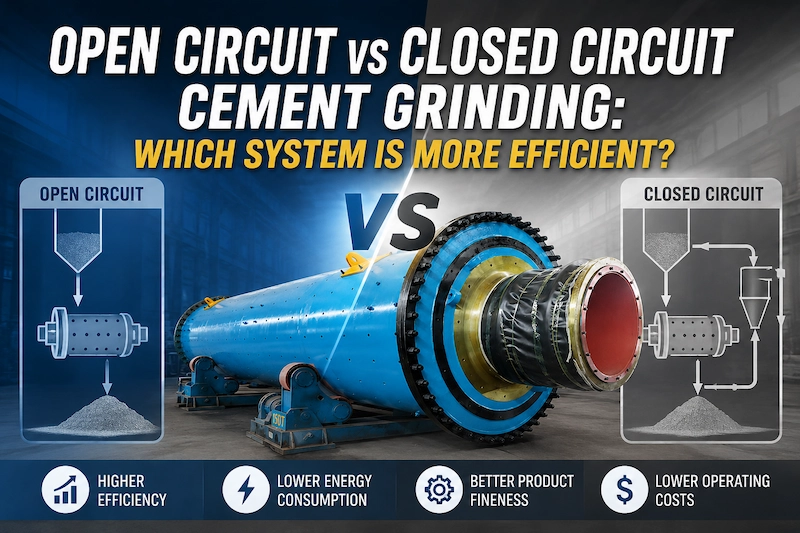
Choosing between open circuit grinding and closed circuit grinding is one of the most important decisions when designing or upgrading a cement plant. Grinding accounts for a significant portion of total power consumption in cement manufacturing, making system efficiency a key factor affecting production costs, product quality, and long-term profitability.
In most modern cement plants, closed circuit grinding systems provide higher efficiency, better particle size control, and lower energy consumption per ton of cement. However, open circuit systems still remain suitable for certain applications due to their simpler design, lower investment costs, and easier operation. Understanding the differences can help plant owners select the most appropriate grinding solution.
An open circuit grinding system allows material to pass through the grinding mill only once.
The process typically follows this sequence:
Clinker → Mill Feed → Grinding Mill → Finished Product
After leaving the mill, the material is collected as final product without any classification or return process.
Simple process flow
Lower initial investment
Fewer auxiliary machines
Easier operation and maintenance
Limited particle size control
A closed circuit grinding system incorporates a separator or classifier that continuously evaluates particle size.
The process flow becomes:
Clinker → Mill Feed → Grinding Mill → Separator → Finished Product + Return Material
Particles meeting specification leave the system as finished cement, while oversized particles return to the mill for further grinding.
Continuous particle classification
Improved grinding efficiency
Higher production capacity
More consistent product quality
Better energy utilization
| Factor | Open Circuit | Closed Circuit |
|---|---|---|
| Process Complexity | Simple | More Complex |
| Capital Investment | Lower | Higher |
| Grinding Efficiency | Moderate | High |
| Energy Consumption | Higher | Lower |
| Particle Size Control | Limited | Excellent |
| Production Capacity | Lower | Higher |
| Product Uniformity | Variable | Consistent |
| Maintenance Requirements | Lower | Higher |
| Automation Potential | Basic | Advanced |
| Modern Cement Plants | Less Common | Widely Used |
One major advantage of closed circuit systems is the elimination of excessive grinding.
In open circuit operation, fine particles continue to remain inside the mill until discharge. This results in unnecessary grinding and wasted energy.
Closed circuit separators remove qualified particles immediately, allowing the mill to focus on larger particles that actually require size reduction.
By reducing unnecessary grinding work, the mill can process larger volumes of clinker.
Many cement producers report capacity increases of 15% to 35% after converting from open circuit to closed circuit operation.
Cement performance depends heavily on particle size distribution.
Closed circuit systems produce:
More uniform particle sizes
Better early strength development
Improved setting characteristics
More consistent product quality
Open circuit systems require fewer components.
Typically no separator, circulating load system, or advanced classification equipment is necessary.
This reduces:
Equipment costs
Installation costs
Construction complexity
Operators have fewer variables to manage compared with closed circuit systems.
This can be beneficial for:
Small cement plants
Remote operations
Developing regions
Facilities with limited technical resources
With fewer machines and moving parts, maintenance becomes simpler and less expensive.
Without classification, considerable energy is spent regrinding particles that have already reached target fineness.
The finished product often contains a wider range of particle sizes, potentially affecting cement performance.
Adjusting fineness requires changing mill operating conditions, which may reduce production efficiency.
Energy savings can be substantial, especially in large-scale operations.
Since grinding is one of the most energy-intensive stages of cement production, even modest efficiency improvements can generate significant annual savings.
Modern cement specifications often require precise control of fineness.
Closed circuit systems allow operators to maintain target Blaine values with greater consistency.
For plants seeking expansion without purchasing a new mill, upgrading to a high-efficiency separator can significantly increase output.
Additional equipment may include:
Dynamic separators
Cyclones
Fans
Dust collectors
Circulating conveyors
Separators and classification equipment require periodic inspection, balancing, and replacement of wear components.
Closed circuit systems often benefit from advanced process control systems and experienced operators.
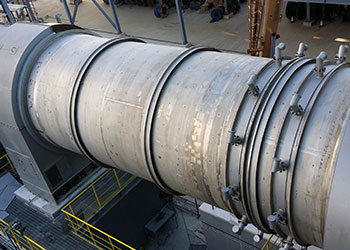
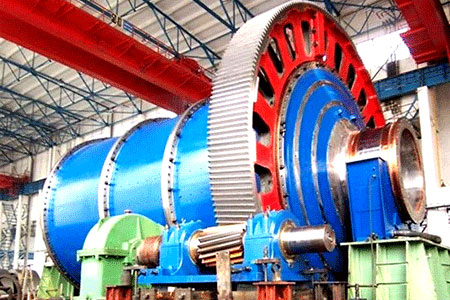
The traditional tube mill cement grinding system remains one of the most widely used technologies in the global cement industry.
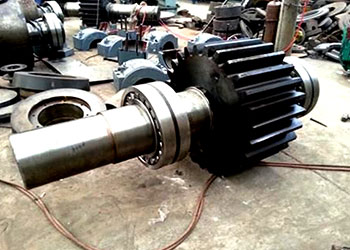
A tube mill consists of a rotating cylindrical shell divided into grinding chambers containing different sizes of grinding media.
Modern tube mill cement installations are commonly paired with:
High-efficiency separators
Roller press pre-grinding systems
Dynamic classifiers
Advanced process control software
These upgrades allow conventional tube mills to achieve performance levels comparable to newer grinding technologies.
In closed circuit systems, coarse particles rejected by the separator return to the mill.
This returning material is known as circulating load.
Proper circulating load management improves:
Grinding stability
Production rate
Separator efficiency
Particle size distribution
Excessive circulating load, however, can reduce mill performance and increase wear rates.
| Plant Type | Recommended System |
|---|---|
| Small Capacity Plant | Open Circuit or Basic Closed Circuit |
| Medium Capacity Plant | Closed Circuit |
| Large Integrated Cement Plant | Closed Circuit |
| High-Performance Cement Production | Closed Circuit |
| Budget-Constrained Expansion | Open Circuit |
Yes. Many plants install high-efficiency separators and modify material handling systems to create a closed circuit configuration.
Depending on material characteristics and equipment design, energy savings of 10% to 30% are commonly achievable.
Improved particle size distribution often contributes to better strength development and more consistent product performance.
Not necessarily. Smaller operations with limited budgets or simple product requirements may still benefit from open circuit systems.
Plant production capacity
Target cement fineness
Available capital budget
Power costs
Maintenance capabilities
Automation level
Long-term expansion plans
Environmental requirements
For most modern cement plants, closed circuit grinding delivers superior efficiency, lower energy consumption, improved cement quality, and higher production capacity. These benefits often outweigh the higher initial investment, particularly for medium and large-scale operations.
Open circuit grinding remains a practical option for smaller facilities, budget-sensitive projects, and applications where process simplicity is a priority. Ultimately, the most efficient system depends on your production objectives, operating costs, product specifications, and future expansion plans.
When evaluating a new grinding project or upgrading an existing tube mill cement installation, a comprehensive technical and economic assessment will provide the clearest path to long-term profitability and operational success.


Contact Us
 English
  日本語
日本語  français
  Deutsch
  Español
  italiano
  русский
  português
  العربية
  română
  Nederland


 日本語
日本語